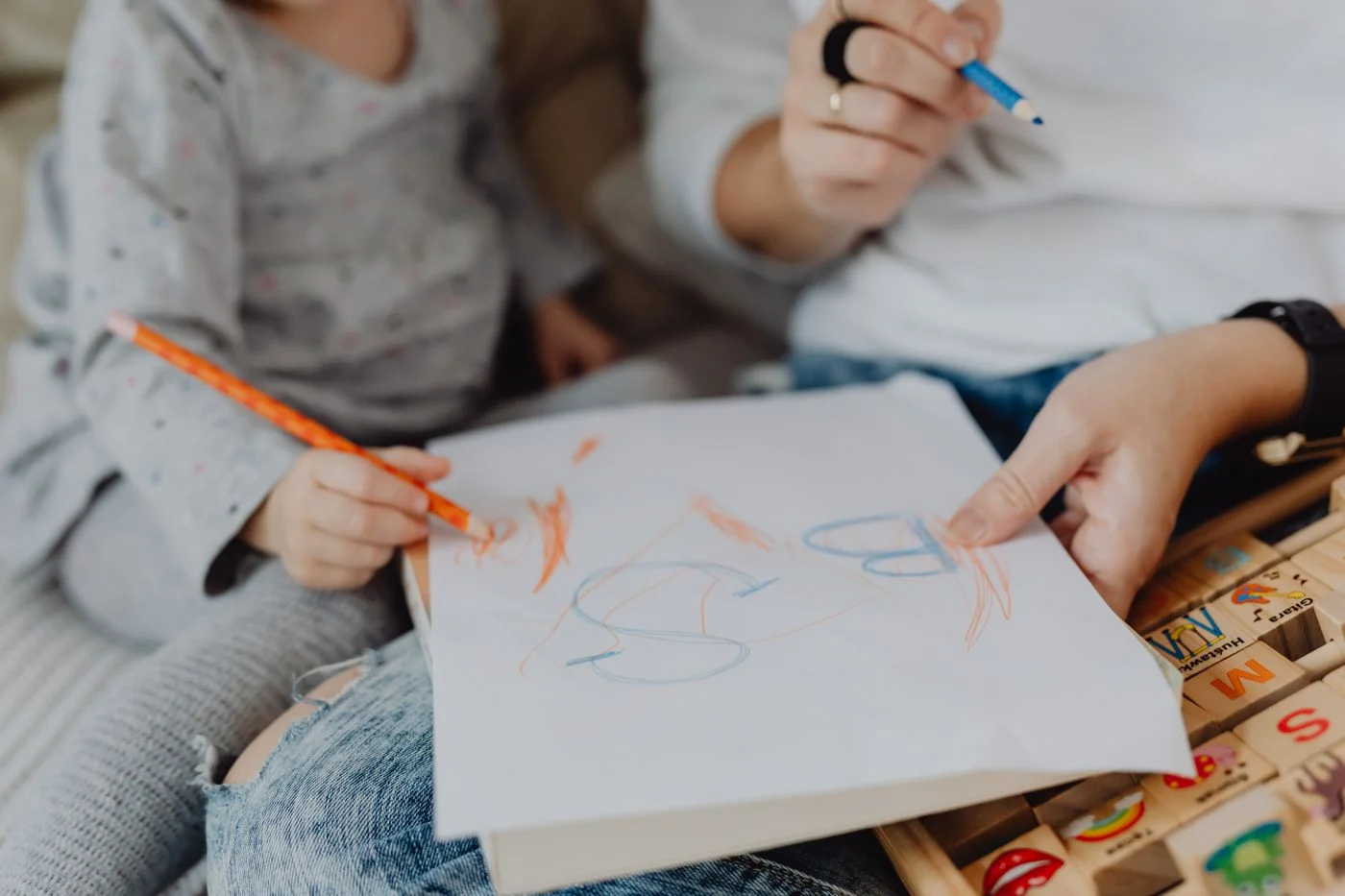
Sitting beside someone with paper does not automatically mean making one shared drawing. The pages may be separate, or only one corner may be open to another person's marks. Clarify that arrangement before beginning. A small creative pause can then be collaborative without becoming a test of whose idea is better. The useful starting point is an explicit invitation to change something, rather than an assumption that all work on the same table belongs equally to everyone nearby.
Name the shared part
Decide whether the activity uses a joint page, separate sheets or another understood format. Keep the choice visible enough that another person can join without guessing where their contribution belongs.
Use suitable materials and an appropriate setting for the actual participants. Where children take part, keep relevant product information and responsible supervision with the adults rather than making the activity a test of independent decision-making.
Ask about the next concrete addition
Describe the mark or area being considered in simple terms. Asking about a border or another shape is clearer than asking to help with everything. Let the person whose work is involved answer without pressure to accept.
Keep the permission limited to what was agreed. An invitation to draw in one part does not automatically authorize erasing or covering another. Shared work can still contain individual choices and boundaries.
Give competing ideas somewhere to exist
Use suitable spare paper for a colour or shape test where helpful. The idea can become visible before it affects the main page. A comparison is not a commitment that the result must be adopted.
Allow different preferences to remain different. Separate pages or a smaller shared area can be more enjoyable than forcing one final design that neither participant actually wanted. Collaboration does not require agreement over every visible detail.
Agree the finish and audience
Decide who keeps the work and whether it is complete or waiting for another session. An unfinished page can still have served a worthwhile creative purpose. The household does not need to preserve every temporary setup indefinitely.
Ask separately before photographing or sharing the result. Permission to make marks together does not establish the audience for an image afterward, especially where that photograph also includes the people or private room around the page.
The finished drawing can be modest, mixed and personal. What makes the activity repeatable is the clarity of the shared area, the specific invitation and the understood ending. Those small agreements leave room for another person's ideas without treating their existing work as material that anyone may improve, and they let an ordinary creative pause remain enjoyable without demanding a perfect collaborative picture.
Related reading
Close a Small Project on a Shared Table, Choose a Journal Page’s Intended Audience before Sharing.
Our approach
Start with what you own, identify a real gap, then compare fit, materials, care and return terms before buying. Availability and prices can change. Read our editorial policy or send a correction.