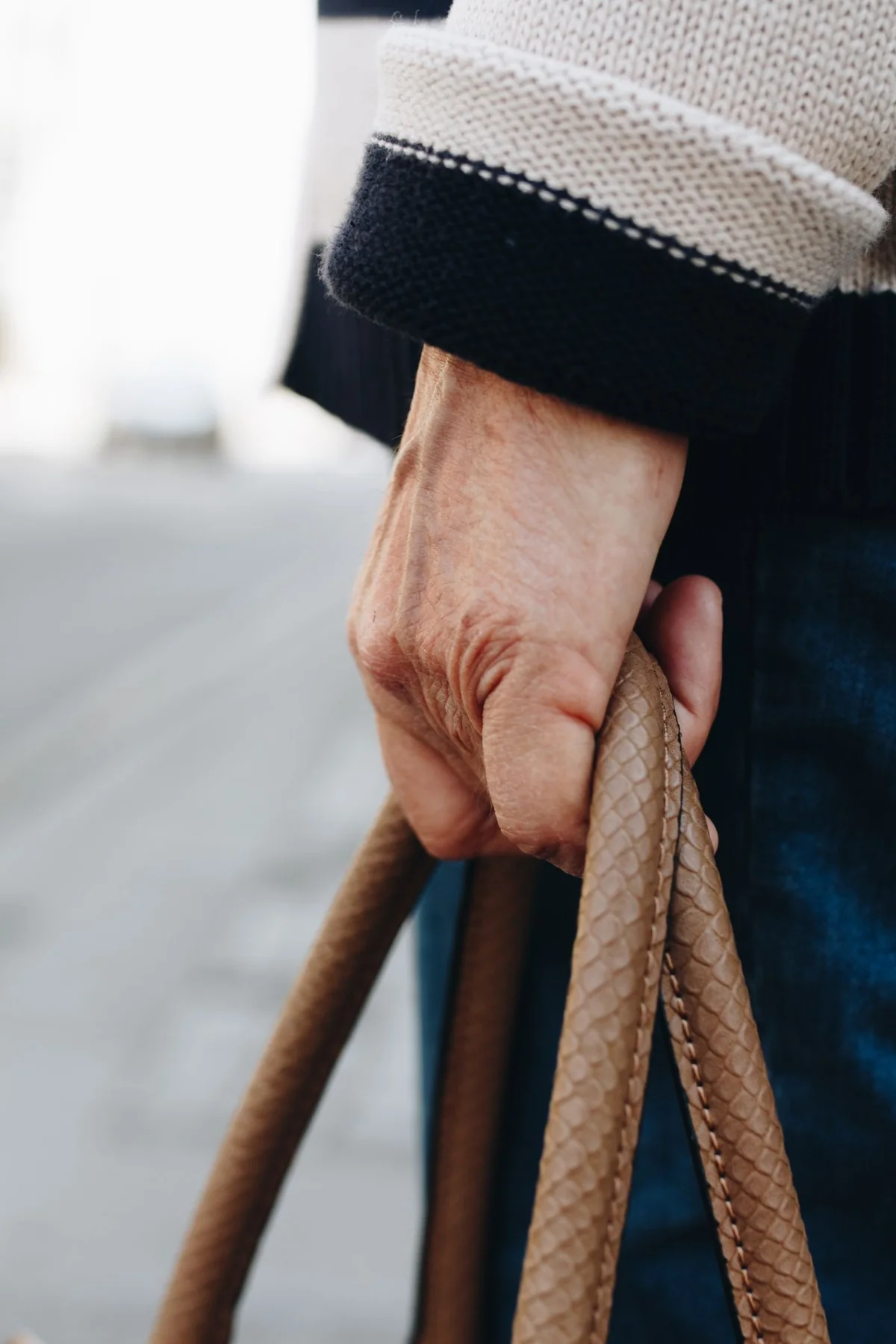
A bag listing can show several attractive views while a handle question remains unanswered. A hand may hide the join, a close crop may lose identity or a general description may not name the area you noticed. Ask for the view that would clarify the actual issue. The purpose is an understandable decision rather than a larger collection of exterior photographs.
Read the existing evidence first
Identify the exact item and relevant variant, then review the available description and handle views. A new request should address a real gap rather than duplicate a detail already clear. Keep supplied condition observations separate from your own interpretation.
A textured brown appearance does not establish material or history. Preserve relevant uncertainty rather than borrowing another accessory's information. Similar-looking handles can belong to different products and should remain distinct in the record.
Name the area plainly
Ask about the accessible handle surface or connection to the bag if that is what remains obscured. Describe a visible difference neutrally without assigning a cause from the photograph alone. A detail image should keep enough context to identify the correct item.
Do not ask for forceful pulling, bending or loading to prove a guessed property. A visual question should not become an improvised test. Appropriate product information or an informed assessment may still be needed beyond what another image can establish.
Keep the explanation honest
A mark, changed-looking stitch or difference between two areas can support a question. It does not automatically establish damage, a repair method or the object's intended role in your own day. Neutral wording leaves room for a factual answer rather than a reassuring generalisation.
If an important point remains unresolved, preserve that limitation. Waiting or choosing an already suitable item remains a practical possibility. The appeal of the image does not require completing the record with the most optimistic interpretation.
Connect the question to actual use
Name the belongings and activity the bag would serve. Read intended-use information rather than deriving capacity from handle thickness or shape. A decorative interest and a daily carrying need are different decisions even when they concern the same object.
An owned bag can help describe what role you seek without transferring its properties to the prospective product. Keep that comparison limited rather than promising identical behaviour from a similar-looking attachment.
Retain the answer with its product
Save relevant clarification and views with the exact listing through the appropriate purchase process. Disconnected close-ups can become less informative because the identity disappears. One understood answer may be more useful than several unexplained pictures.
Follow applicable guidance if ordering and use the appropriate process for a discrepancy between the received item and the information relied on. A specific handle question keeps the real concern honest, allowing appearance to guide preference while respecting what photographs can and cannot establish.
Related reading
A Bag Strap That Leaves the Coat Shoulder Comfortable, Secondhand Shopping With a Plan, Not a Pile of Maybe.
Our approach
Start with what you own, identify a real gap, then compare fit, materials, care and return terms before buying. Availability and prices can change. Read our editorial policy or send a correction.