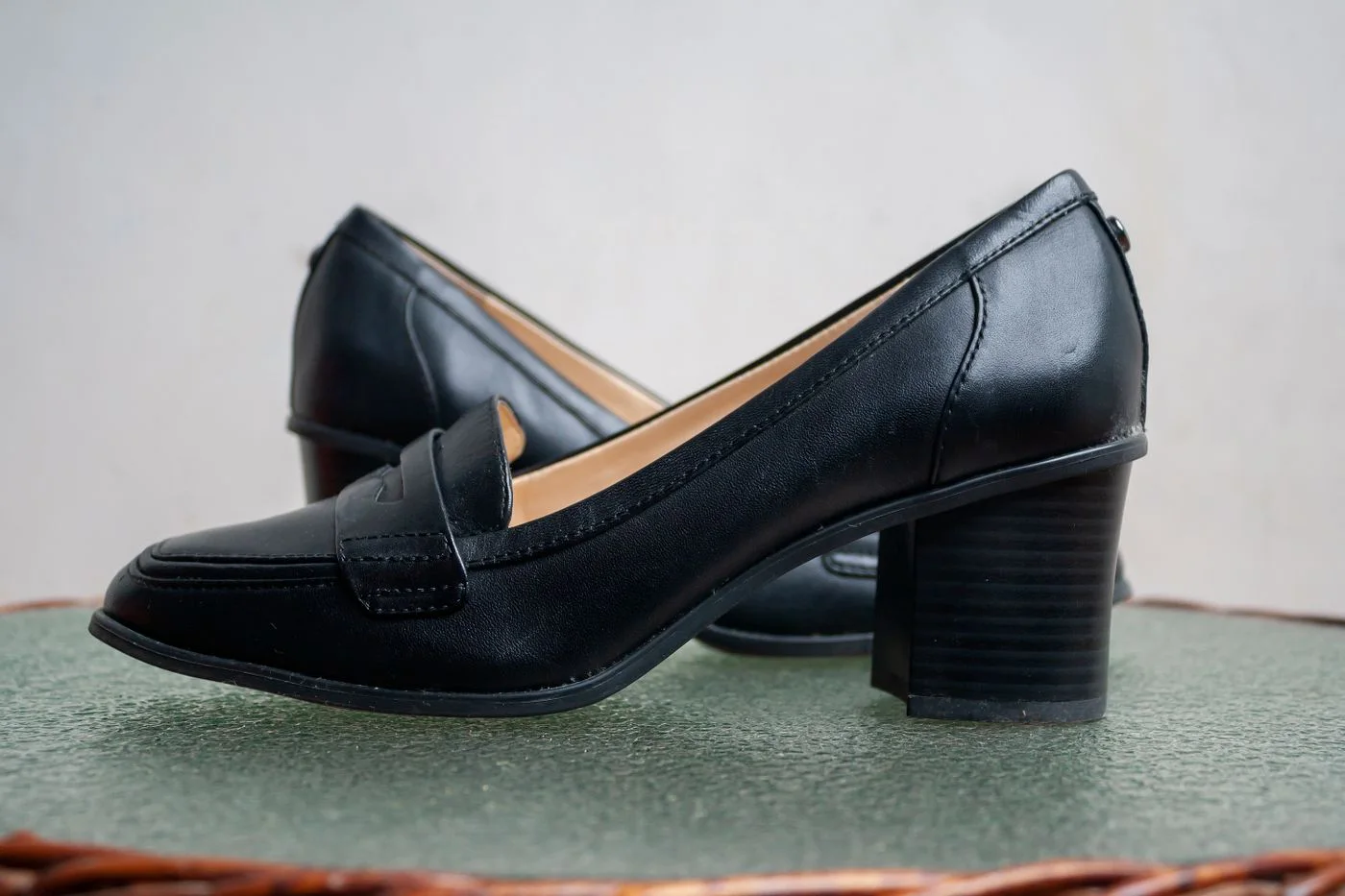
A low-heeled loafer can provide another line beneath fuller trousers, but the hem and shoe need a practical trial together. Height, toe shape and heel hold all affect the result. Begin with a comfortable pair suitable for the day, then judge proportions. Footwear should not be selected only to keep an otherwise impractical hem off the ground.
Check the loafer fit first
Try both shoes with the legwear intended. Walk on an appropriate surface and remain standing briefly. Notice heel slip, toe room and upper contact. A close-looking loafer can still be uncomfortable, while a larger size may not solve an unsuitable shape. Compare the actual fit rather than assuming a low heel automatically makes a pair easy for long wear.
Put on the trousers at their natural rise
Fasten normally and use the usual belt if part of the outfit. A slipping waistband changes hem length and can make the shoe relationship appear inconsistent. If the rise or seat is restrictive, address that separately. Shortening the leg or adding a higher shoe will not resolve an uncomfortable fit through the main part of the trousers.
Inspect all-around clearance
Walk, turn and sit without immediately smoothing the hems. A full leg may show a little toe while dragging at the back. Check ground contact and whether fabric catches near the shoe opening. A reversible hem trial can indicate a useful change where suitable. Ask a competent alteration specialist about taper, lining or decorative detail before choosing a permanent finish.
Compare one other owned shoe
If the trousers need to work with a flat as well, try it now. Different heights can require a deliberate priority rather than a poor compromise. A separate trouser pair may serve the lower shoe better. Avoid buying an uncomfortable heel solely to preserve the existing length. The useful combination should support the actual walk and seated day.
Let accessories stay optional
The shoe's shape and trouser volume already create a relationship. A matching belt or bag is not required, although a related tone can connect them if wanted. Try the complete outfit with the normal coat and carrying load. A neat lower silhouette is only one part of an arrangement that must remain comfortable through the rest of the day.
What should be inspected before an outing?
Check soles, heel tips and uppers and allow time for appropriate repair where needed. Clean according to materials and inspect the trouser hem for existing abrasion. After any alteration or repair, repeat the full movement trial. A low heel earns its role through fit and practical clearance, not through the promise that one modest height will make every fuller trouser work with every shoe.
Related reading
Continue with Comfortable Everyday Shoes: A Shopping Checklist for Real Walking and Autumn Layering for Mornings That Change Their Mind. These existing guides provide a broader starting point for the related wardrobe, home or planning decision.
Our approach
Start with what you own, identify a real gap, then compare fit, materials, care and return terms before buying. Availability and prices can change. Read our editorial policy or send a correction.