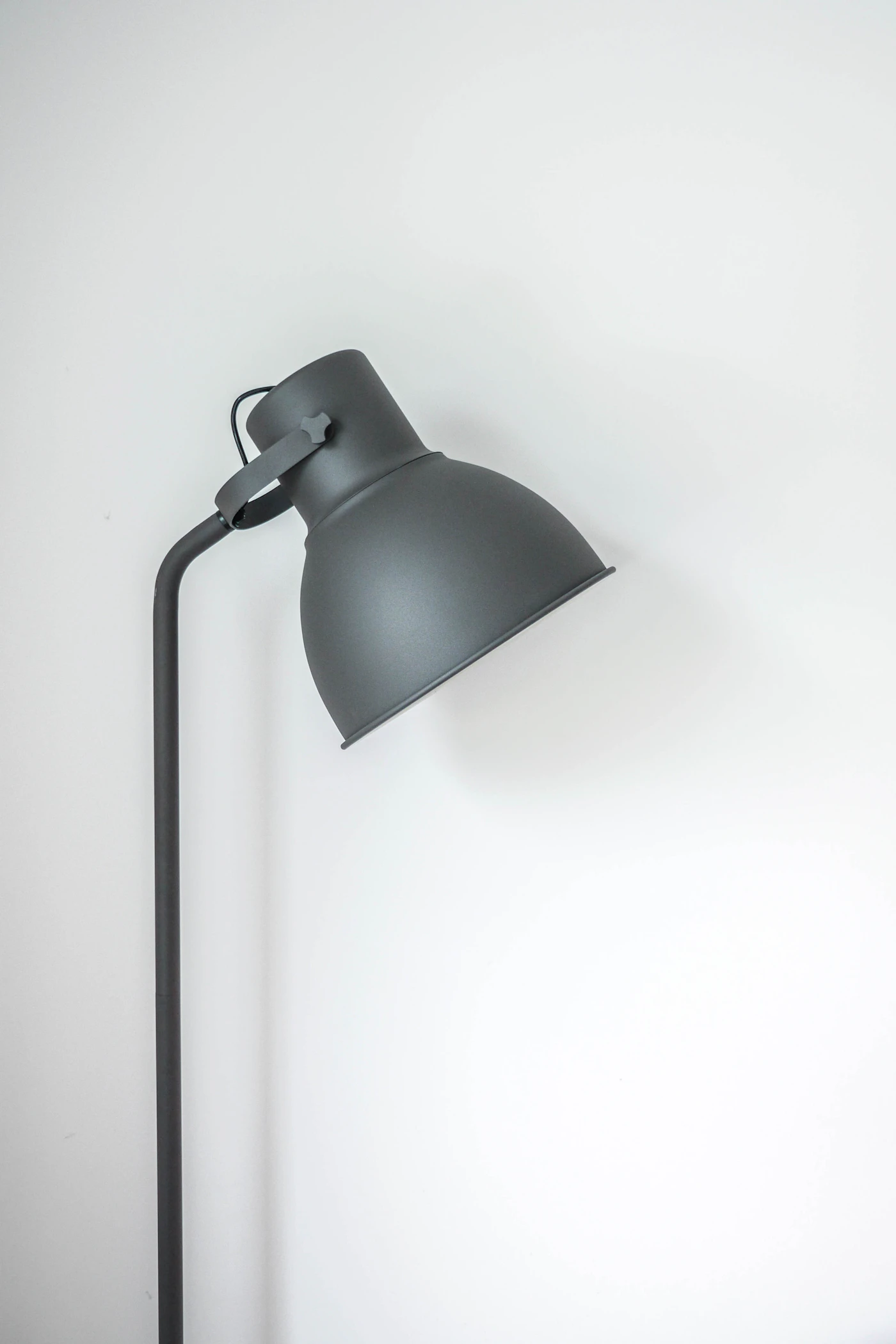
A desk lamp earns its place through the task it helps you do. A dark adjustable lamp against a pale wall can make a handsome photograph, yet the useful comparison starts with a real activity: reading a paper letter, writing a card or examining a small detail. Choose one task first. This narrows the question from furnishing an ideal desk to understanding the surface already in use.
Name the working area
Set out the ordinary belongings for that task before considering the lamp's position. For a handwritten card, this might mean the open card, a sheet for testing the pen and an envelope. The useful area extends beyond the attractive central object.
For reading, include the book open at the angle you normally use. A closed book makes the arrangement look smaller and reveals little about where the page will actually sit. Keep the normal chair position in the comparison.
Notice where your hand casts a shadow
Observe an existing suitable lighting arrangement during the task. A writing hand may block light coming from one side, while a tall object beside the lamp can interrupt it elsewhere. Record the visible problem in plain terms before deciding a different lamp is the answer.
This is a placement observation rather than an electrical project. Follow the lamp's stated use and adjustment limits, and keep its base supported on an appropriate surface. Do not improvise an attachment to gain a position the product does not support.
Leave room for the surrounding objects
A compact-looking shade can sit above a base that needs a substantial area. Compare the complete footprint with the occupied desk, including the room required to turn a notebook page or move an envelope aside. A photograph cropped at the tabletop cannot settle those dimensions.
Keep cables and controls within the actual product arrangement. An attractive image may conceal them behind furniture; that is a photographic choice rather than proof they disappear in ordinary use. Read dimensions and product information before making a purchase comparison.
Compare the desk when the task ends
Return the paper or book to its normal place and look at the surface again. Does the lamp still have a clear role, or has it displaced the everyday landing spot for something else? A task light can be useful without remaining the visual centre of every desk photograph.
Write one specific observation, such as the open notebook occupying the space formerly used for correspondence. This identifies a real tradeoff. It avoids the vague conclusion that a larger or more expensive lamp must automatically make the room work better.
Keep the decision proportionate
If the current arrangement serves the chosen task, a new furnishing may be unnecessary. If an unresolved question remains, preserve it with the product reference instead of filling the gap from a styled image. The best next step follows the observed task and the available space, leaving the rest of the room free to retain its existing purpose.
Related reading
A Short Note about an Outfit’s Repeated Adjustment, Organise Your Wardrobe Before Buying Another Storage System.
Our approach
Start with what you own, identify a real gap, then compare fit, materials, care and return terms before buying. Availability and prices can change. Read our editorial policy or send a correction.