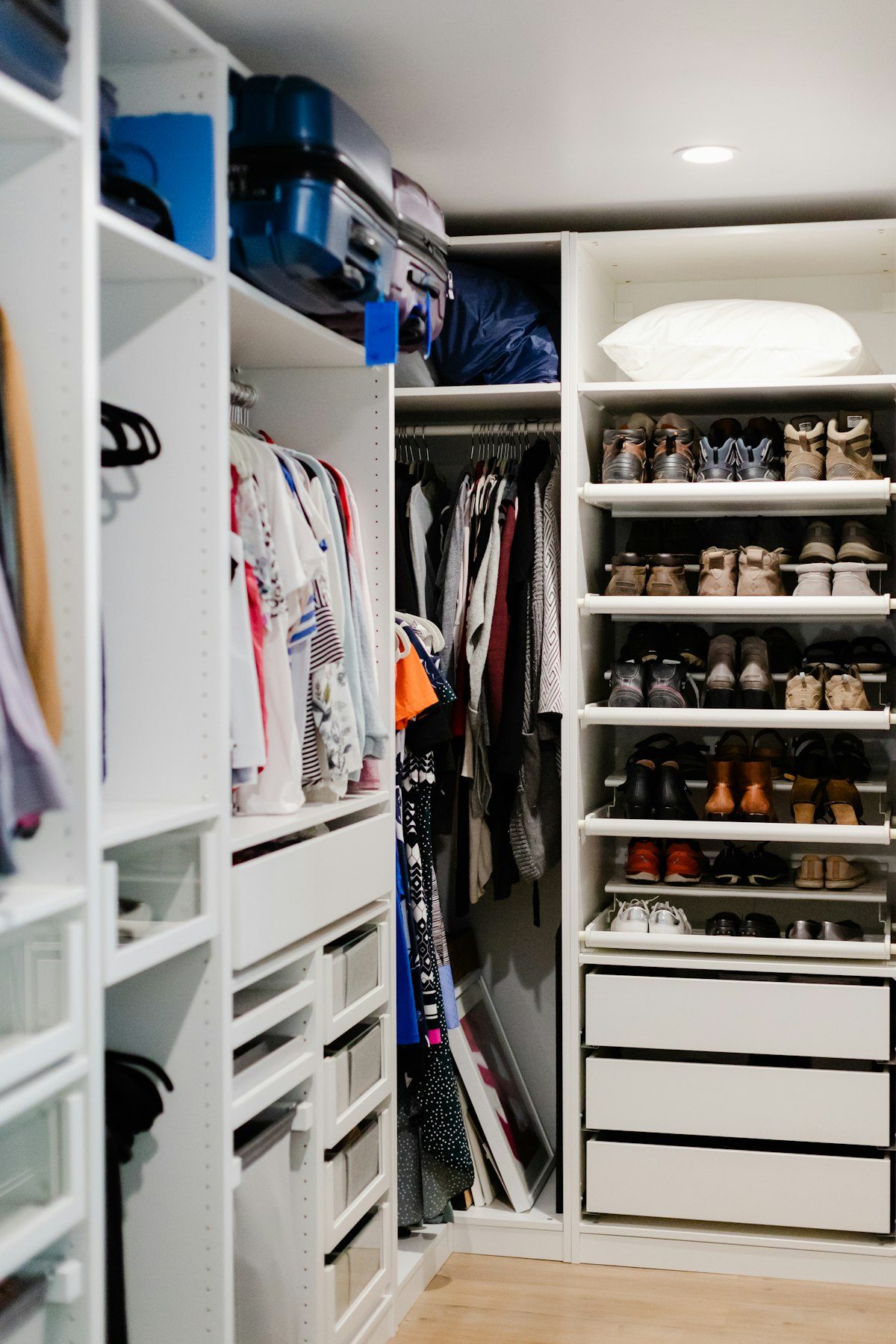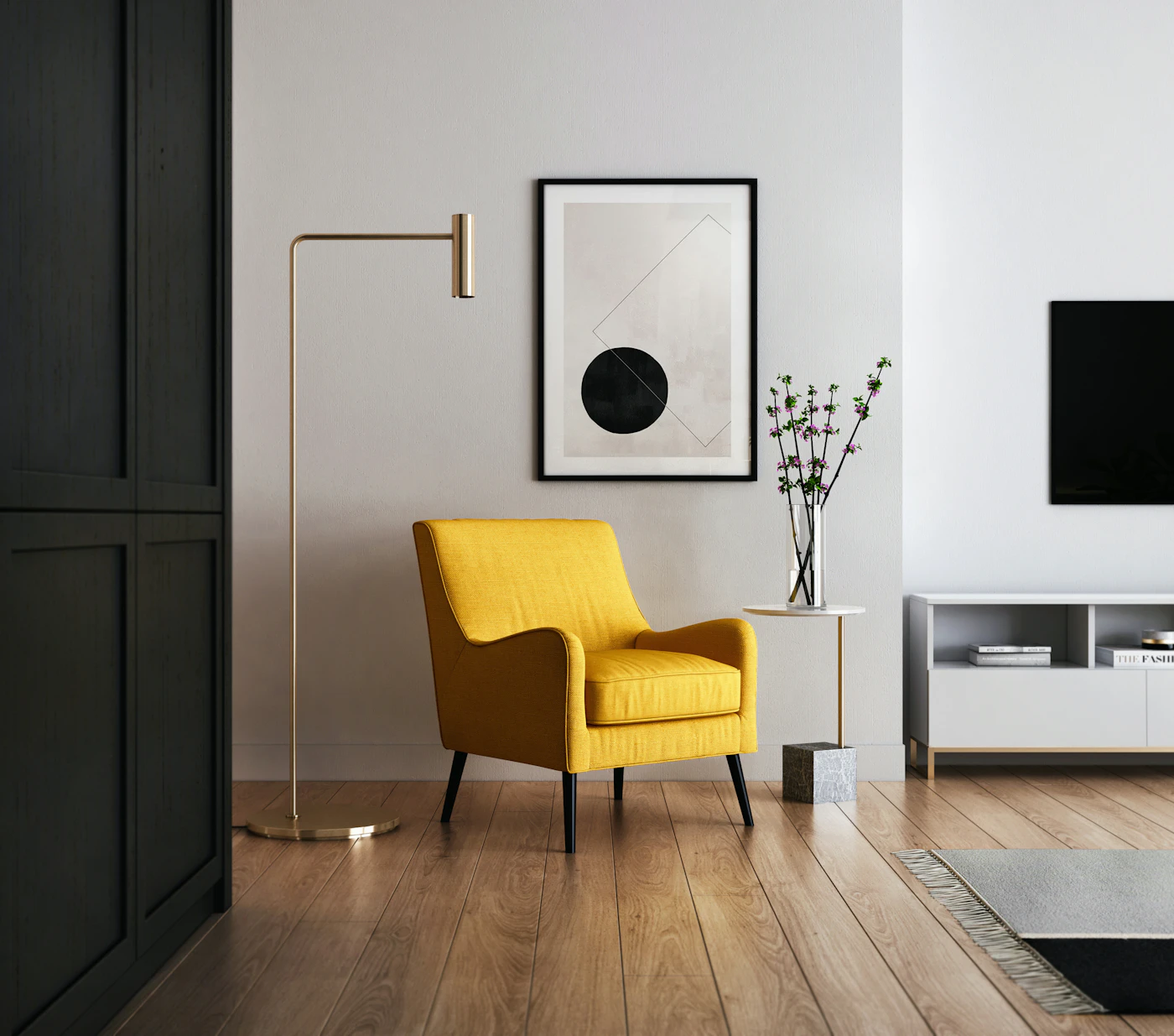
A yellow upholstered chair can suggest several different rooms without proving it belongs in any of them. Before following that impression, compare two actual roles: a seat for reading beside the living-room bookcase, for example, and a place to sit while putting on shoes in a bedroom. The same shape can meet one need and complicate the other. Start with activities rather than assigning a chair a personality.
Describe the two uses separately
For the reading role, note what usually accompanies the pause: a book, glasses and perhaps a drink on an existing suitable surface. For the bedroom role, describe the clothing or footwear routine without assuming the chair should also become a place to pile garments.
This is a comparison on paper before moving furniture. Record the practical differences in the two locations. A floor lamp visible in a reference image does not establish the lighting available in your room, and a generous photographic angle does not establish clearance.
Use the furniture already present
Sketch the surrounding pieces and record available dimensions accurately. Keep door openings, drawers and the usual route through the room in the picture. Measuring an empty corner alone can miss the way adjacent furniture is used.
Compare the chair's stated complete dimensions rather than estimating from its cushion or back. A rounded arm or angled leg can extend beyond the seat. If a relevant measurement is unavailable, retain that question instead of substituting a guess based on another chair.
Give each role a nearby surface question
Reading often raises the question of where a book goes when the pause ends. Dressing raises a different one: where the worn or unworn item belongs afterward. Use existing suitable storage and surfaces in the plan rather than automatically adding a matching side table to make the image feel complete.
A chair should not silently absorb an unresolved organisation problem. If the bedroom proposal relies on leaving clothing on the seat every evening, name that as the actual plan. Decide whether it serves the room before calling the chair a solution.
Consider the visual relationship
Compare the chair's colour with the largest existing areas: walls, floor and the adjacent sofa or bed. A small bright seat may provide a deliberate interruption, while repeating its colour in several new accessories can create a larger commitment than intended.
Use a photograph as a reminder of the idea, with its lighting limits understood. It cannot promise that the same yellow will appear identical beside your own furnishings. The decision can stay focused on a single chair without recreating the entire illustrated room.
Choose one defined purpose
Review which proposed location has both a real need and enough understood space. If neither does, the photograph can remain an enjoyable reference. If one does, keep the measurements and role together for the next stage of the comparison. A clear purpose is more useful than making one chair carry two imagined improvements at once.
Related reading
Working Space between Hanging Clothes, A Short Note about an Outfit’s Repeated Adjustment.
Our approach
Start with what you own, identify a real gap, then compare fit, materials, care and return terms before buying. Availability and prices can change. Read our editorial policy or send a correction.