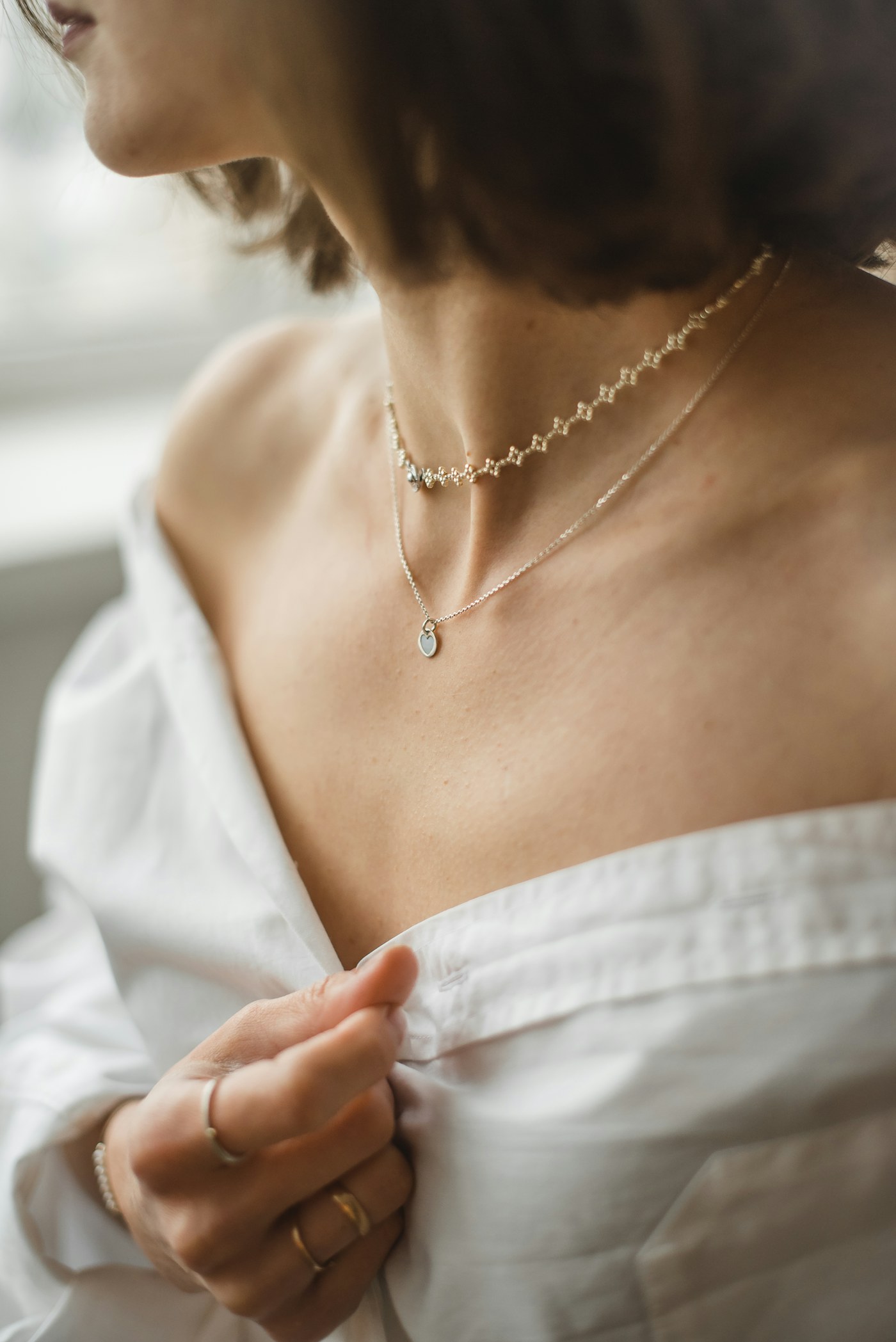
A layered necklace arrangement is temporary, while each chain remains an individual piece with its own fastening and care information. Keep that identity clear when the outfit ends. A modest return sequence can prevent a visually simple combination from becoming an anonymous bundle in the jewellery drawer.
Identify the individual pieces
Before wearing, distinguish the necklaces and their intended closures. Read relevant maker information where needed. Similar colour does not establish identical material or handling requirements, and the styling group should not erase those differences.
Keep any supplied components or private product records associated with the correct chain. There is no need for an elaborate collection catalogue if a small clear grouping is enough. The useful information is what allows the piece to be understood when it is no longer part of the outfit.
Remove through the intended fastenings
At the end of wearing, identify one closure and handle it as instructed. Keep the first piece separate while removing the next. Avoid pulling the whole group over the head if that is not the intended process for the individual necklaces.
If pieces have become caught together, do not use force or unfamiliar household tools to separate them. Follow relevant guidance or seek appropriate help for delicate or valued items. A desire to finish dressing quickly should not create another condition problem.
Complete care individually
Follow the actual instructions for each piece before storage. Do not assume that necklaces worn together should be treated through one process. A shared outfit role is not evidence of shared care needs.
Keep a piece awaiting attention distinct from the ready group while preserving its identity. A neat storage position should communicate an understood status, not hide a question about condition or a fastening that no longer operates as intended.
Choose suitable separate positions
Use storage appropriate to the jewellery's construction and maker guidance. Keep chains from becoming an unlabelled pile simply because they occupied the same neckline during the day. The return arrangement can be modest while still preserving individual relationships.
If a travel case is involved, check its intended use and the actual fit of the pieces. Do not force several chains into one narrow section to reproduce a compact packing photograph. A suitable carrying arrangement supports their needs rather than treating every necklace as interchangeable flexible material.
Preserve the pairing without storing it tangled
Keep a private note or appropriate photograph of the successful outfit combination if useful. That record can preserve the visual idea while the actual objects return individually. The jewellery does not need to remain physically bundled to remember how it was worn.
Update the record if a piece leaves or changes through an appropriate process. A useful layered outfit ends with understood individual returns, leaving the next choice easy. It allows familiar chains to work together stylistically without losing the product identity that makes them manageable outside the mirror view.
Related reading
A Necklace with a Plain Everyday Neckline, Choose an Accessory Gift That Feels Thoughtful and Useful.
Our approach
Start with what you own, identify a real gap, then compare fit, materials, care and return terms before buying. Availability and prices can change. Read our editorial policy or send a correction.