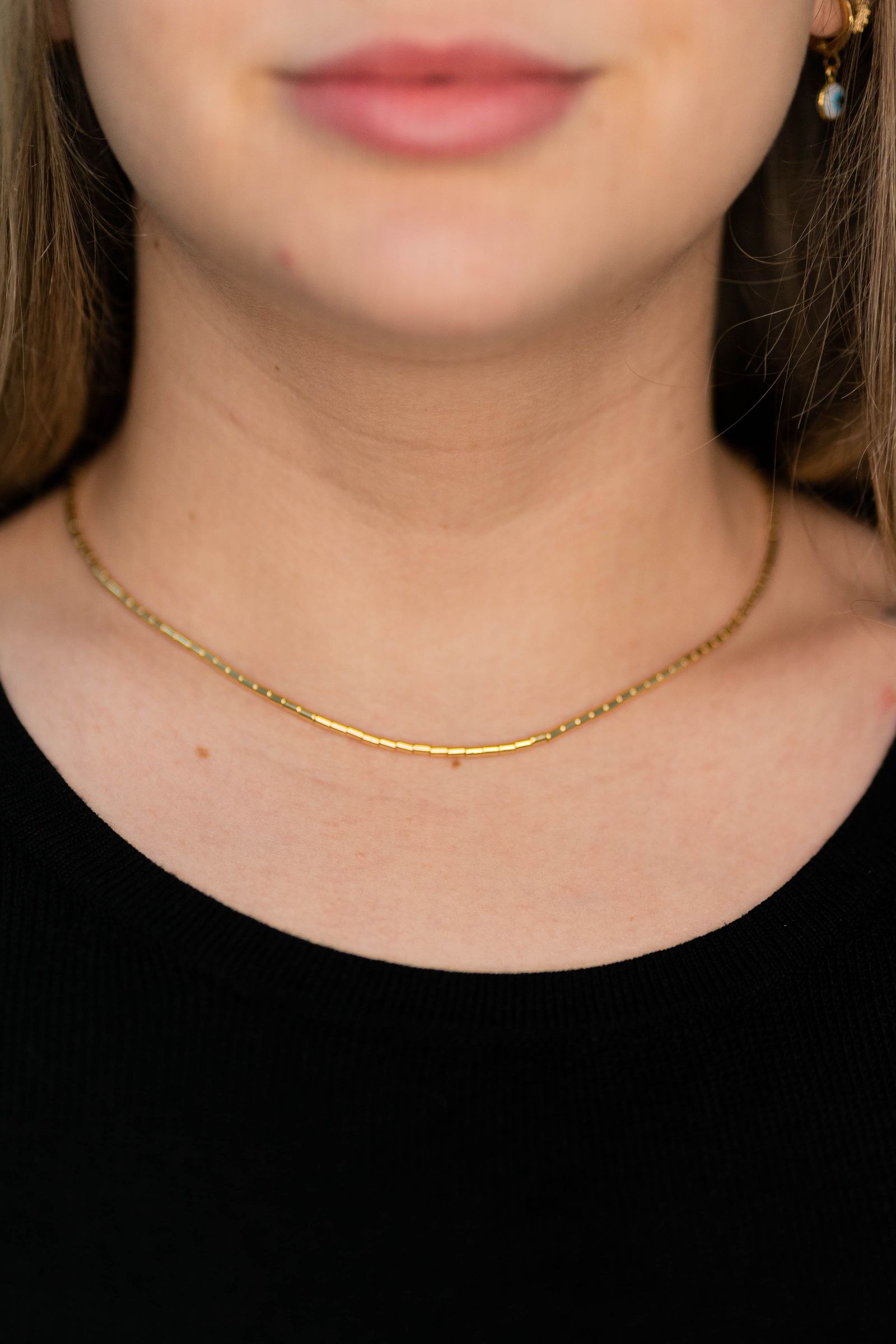
A necklace can be the only detail needed beside a plain top. Its position depends on the neckline, pendant and layers, not simply the length stated on a listing. Try the whole combination before buying another chain to adjust the line. The useful piece remains comfortable through ordinary movement and has a manageable fastening, rather than repeatedly catching the collar or disappearing into an opening where you keep retrieving it.
Begin with the everyday top
Let the neckline settle naturally and add an existing necklace where available. It may rest above, across or on the fabric according to the construction. Choose the relationship you enjoy and check contact. A piece useful with one neckline does not have to suit every top. Familiar clothes make the jewellery's role clear without several new outfit decisions competing at once.
Compare actual measurements
Read the maker's method and supported adjustment range. Pendant and clasp construction can change the effective drop. A familiar piece offers a useful comparison beside separate product photographs. If alteration is considered, ask a competent jeweller about material and joins. Adding links or changing a closure is not a universal simple fix for every chain.
Check and use the clasp
Inspect condition gently and follow handling guidance. Choose a closure you can manage or appropriate assistance where needed. A small sound fastening can still be inconvenient. An unreliable one should be assessed rather than worn simply because the necklace sits at the ideal point. Decorative placement is not a substitute for clear handling and suitable condition.
Add the journey layers
Try cardigan, coat, scarf and loaded bag. Sit and turn naturally, noticing catches or pressure. A strap can alter where the top rests too. The indoor and outdoor relationships need to work together. A long necklace may create another issue at the waistband; a short one can crowd a collar. There is no single ideal length separate from the complete outfit.
Keep several chains optional
If layering, assess movement and material compatibility. Some combinations tangle or rub and should not be expected to remain perfectly separated all day. Follow suitable care advice. One necklace can be complete when the garment already has texture or a distinctive neckline. More pieces are a preference rather than proof that simplicity has been properly dressed up.
Must metals and finishes match?
No. A modest relationship in scale or colour can be enough if desired. Use comfortable sound pieces and manageable maintenance. The successful necklace has a clear place and closure, allowing its detail to be enjoyed without repeated neckline corrections. Its value comes from real outfits worn comfortably, not the theoretical number of combinations imagined before any have been tried.
Related reading
Choose an Accessory Gift That Feels Thoughtful and Useful, A Practical Capsule Wardrobe for the Week You Actually Have.
Our approach
Start with what you own, identify a real gap, then compare fit, materials, care and return terms before buying. Availability and prices can change. Read our editorial policy or send a correction.