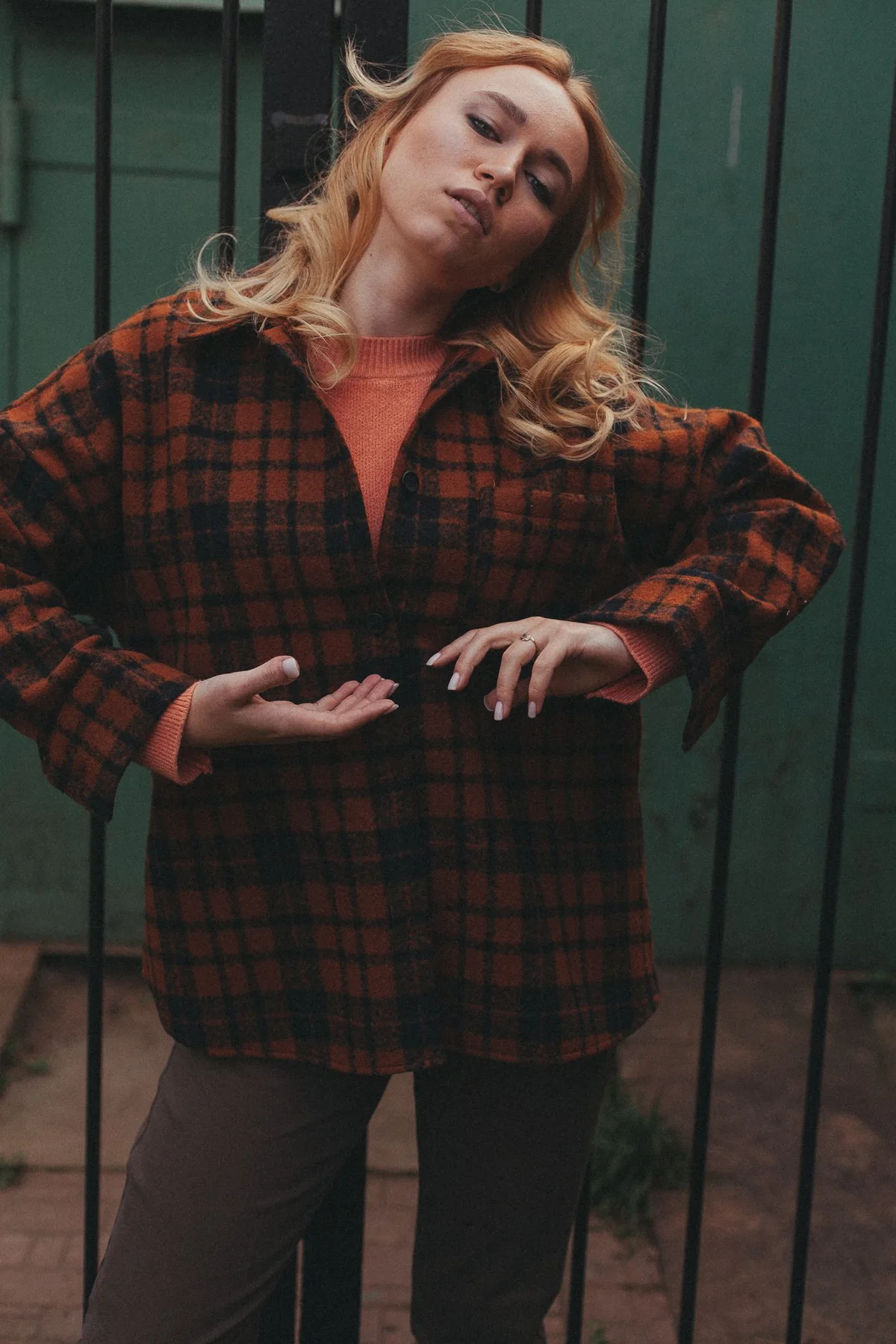
A checked overshirt already contains several lines and tones, so the rest of the outfit can stay straightforward. Begin with a familiar plain base and choose one colour connection if useful. Exact matching is unnecessary. The practical fit still comes first: a visually strong layer should allow comfortable sleeves, fastening and movement rather than distract from fabric that bunches beneath the arms.
Start with plain pieces you trust
Choose a top and bottoms already useful for the day. Try the checked layer before changing shoes and accessories. This makes its effect easier to judge. A quiet base can let the pattern lead, while a more colourful base creates another deliberate relationship. There is no need to purchase a complete matching set simply because a check includes a shade not elsewhere in the wardrobe.
Check armhole and sleeve room
Wear the actual base, raise the arms, reach and sit. A full sleeve needs compatible space beneath the overshirt. More overall body width may not solve a restrictive armhole. Compare the cut or base sleeve rather than making every layer tighter. The inner top should not need pulling down after each reach just to preserve the preferred outside outline.
Try the front closed too
An open overshirt can feel easy, but the weather or activity may make fastening useful. Check buttons and chest ease while seated. Do not assume a garment labelled relaxed is suitable in every size. Pocket contents can also alter the front; test the small load intended where permitted and keep heavier essentials in a suitable bag if the fabric pulls.
Repeat one tone sparingly
Use an existing top, sock or small accessory related to one colour in the check. The relationship can be loose and intentional rather than exact. View the complete outfit from normal distance and in suitable light. A patterned bag is optional; if the result feels busy, simplify one other detail instead of rejecting the check itself.
Compare the hems in movement
A longer overshirt over a shorter base offers one clear line. A visibly longer base creates another. Check the side and back while seated, and avoid forcing a substantial woven layer into a tight waistband. If rolling sleeves, choose a fold that stays comfortable without repeated pushing. Leave them down when rolling adds more work than interest.
Is it enough for outside wear?
Use the actual garment's warmth and stated properties with a current forecast. A shirt-like shape does not establish weather protection. It can remain a useful indoor layer even when a separate coat is needed. Empty pockets, undo suitable fastenings and follow the care instructions. A personal patterned outfit works best when its colours are enjoyable and its practical layers can be comfortably worn, removed and maintained.
Related reading
Continue with The White Shirt: Find Your Version of a Wardrobe Classic and Autumn Layering for Mornings That Change Their Mind. These existing guides provide a broader starting point for the related wardrobe, home or planning decision.
Our approach
Start with what you own, identify a real gap, then compare fit, materials, care and return terms before buying. Availability and prices can change. Read our editorial policy or send a correction.