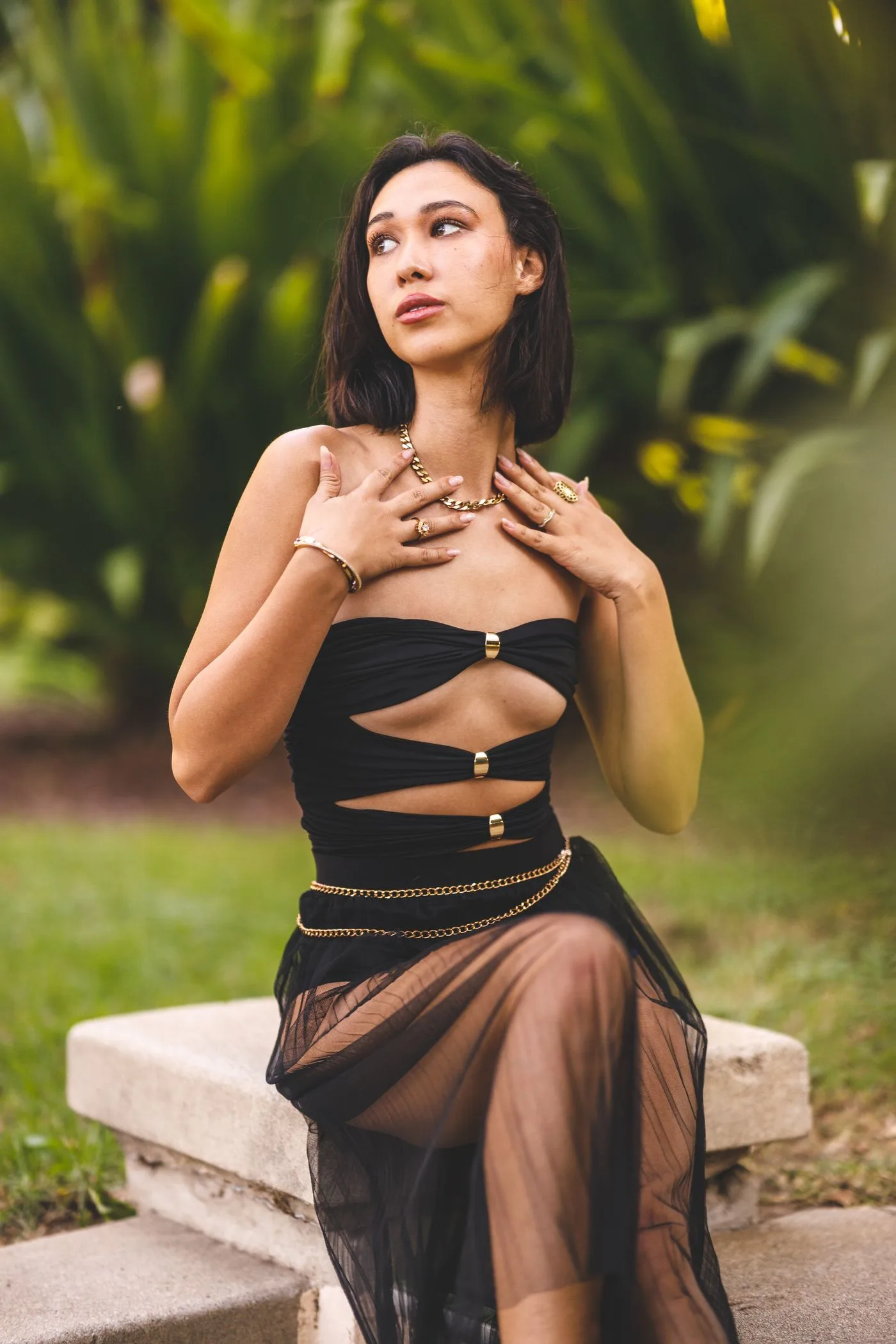
A cut-out dress creates a specific relationship between fabric, openings and supporting layers. A carefully arranged mirror view may hide movement that becomes clear at a table or during travel. Try the positions the occasion actually contains. The useful garment stays comfortable according to your preferences without repeated checking or improvised attachments intended to keep each edge in one photographed position.
Wear the intended support
Use what you genuinely plan underneath and assess front, side and back while seated too. A less-visible base is not automatically comfortable. If the design requires an arrangement you do not want, choose another garment rather than assuming accessories will remove the compromise. The supporting relationship belongs to the outfit, not a small detail guaranteed to resolve later.
Sit and reach naturally
Spend several minutes on a suitable chair and move safely within fitting conditions. Notice pulling or coverage shifts beyond your preference. Repeated repositioning during a short trial is useful evidence about the garment's role. Do not plan to remain standing carefully through an event to maintain the most appealing angle. Another cut can suit the actual day better.
Check the entire fastening
Close as designed and assess seams and tension. A larger size may improve one area while changing others. Compare cuts rather than choosing by a single opening alone. Avoid improvised pins, clips or adhesives to force an unsuitable relationship into place. A proposed alteration needs competent assessment of the real material and construction before the purchase depends on it.
Add journey pieces
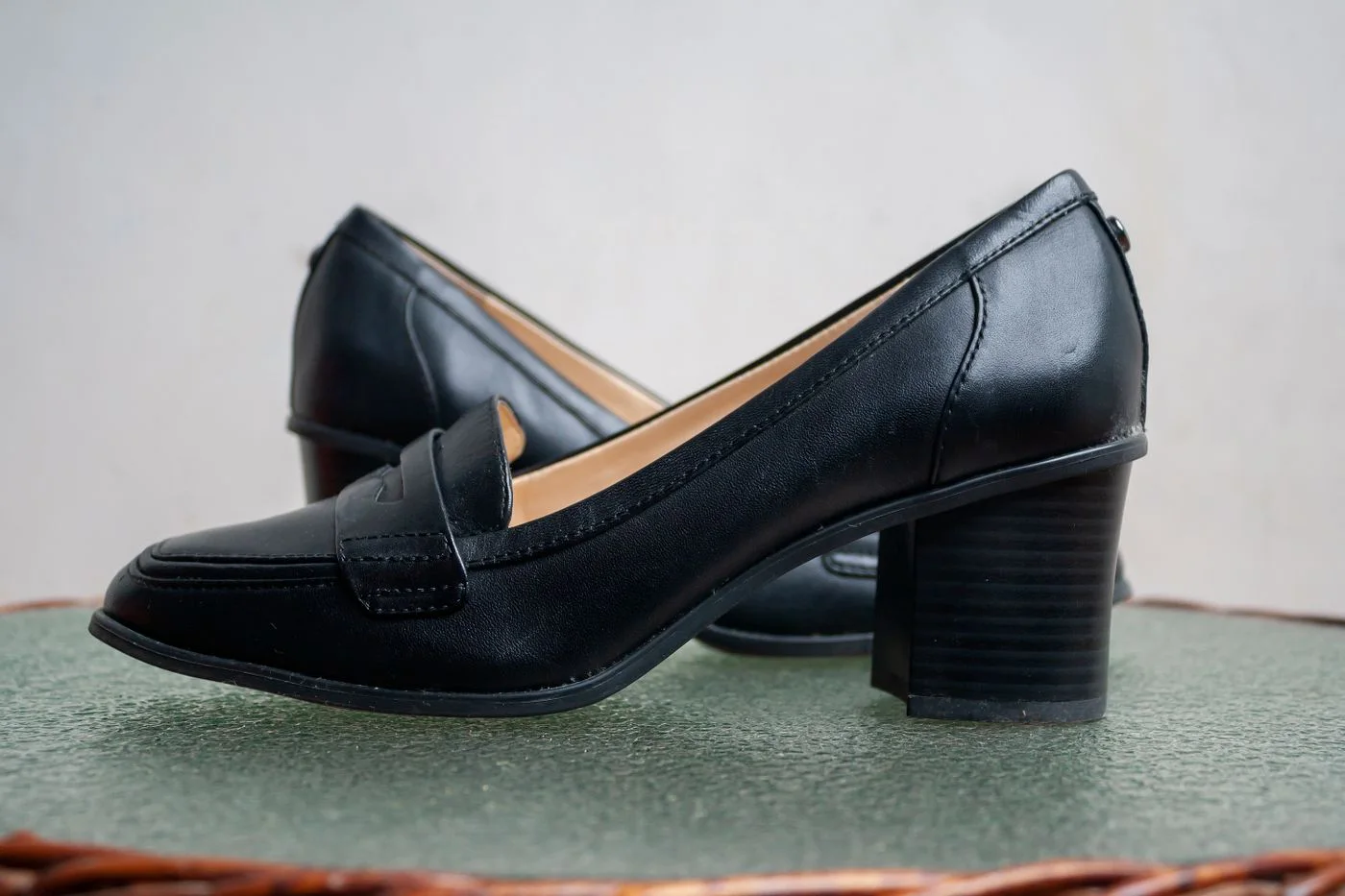
Try suitable shoes, bag and outerwear. A strap may cross an opening or pull the upper part unevenly. Fasten the coat where conditions require it and check the base after removal. Outerwear should not have to stay closed all evening to make the dress acceptable indoors. Choose protection and footwear for the journey rather than the photograph alone.
Keep decoration purposeful
The openings already provide a distinct detail. Simple jewellery can be enough, though the amount is your preference. Check suitable contact and catches. More objects do not resolve fit uncertainty. Look at the complete outfit at normal distance instead of treating every plain area as a gap requiring another purchase. The garment's movement remains more important than filling space around it.
Can extra coverage be added?
Sometimes, but effect and feasibility depend on construction. Ask before buying on the assumption that an insert or small seam change is straightforward. Compare the realistic result and cost with another suitable dress. The successful choice allows comfortable ordinary movement, keeping the occasion more important than supervising the garment after each change of position.
Related reading
Plan an Occasion Outfit You Can Wear Again, Choose an Accessory Gift That Feels Thoughtful and Useful.
Our approach
Start with what you own, identify a real gap, then compare fit, materials, care and return terms before buying. Availability and prices can change. Read our editorial policy or send a correction.