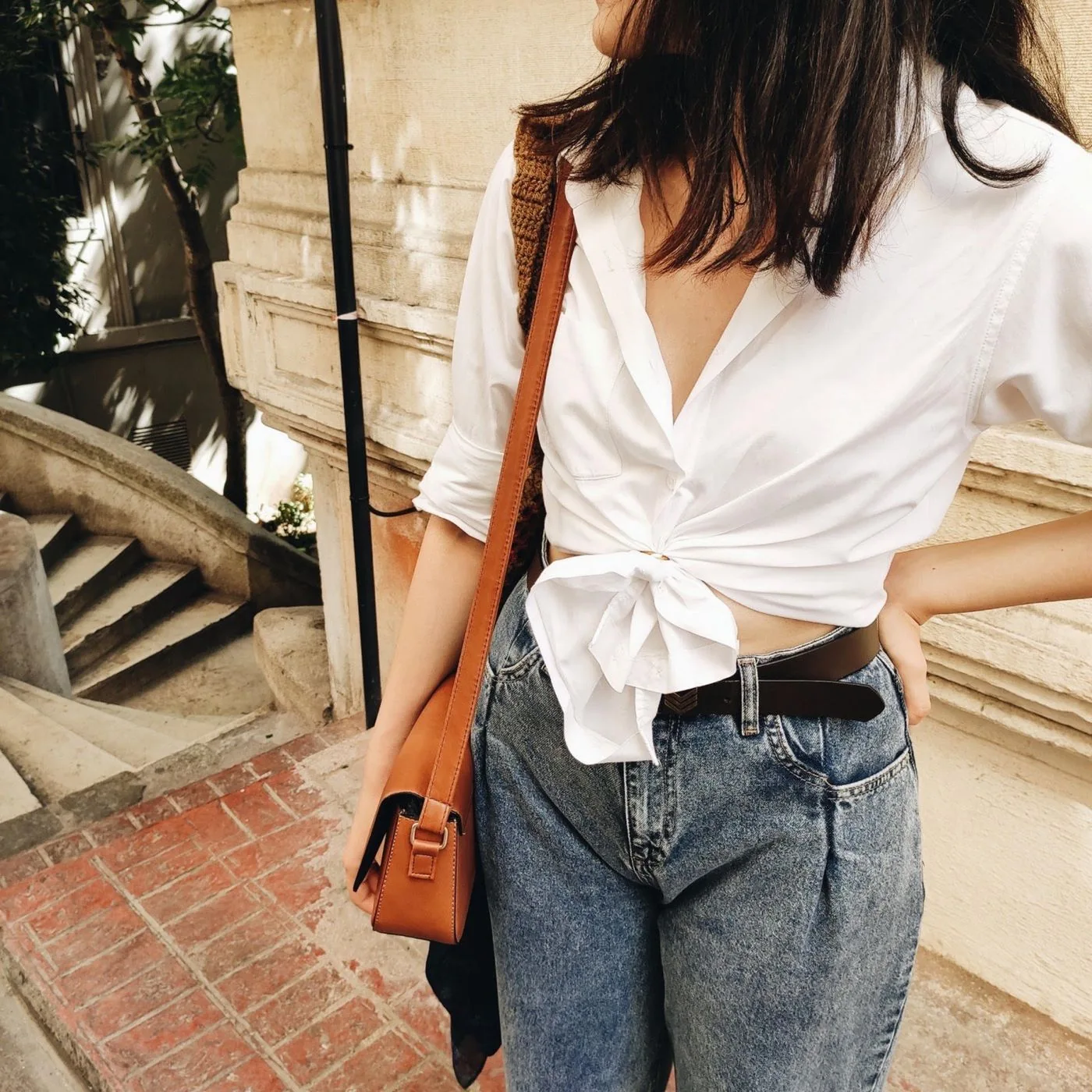
A knot can change how a longer shirt meets the waistband without a permanent alteration. It is an option for suitable garments, not a requirement for every loose top. Begin with construction and condition. The useful arrangement stays comfortable when seated and reaching, rather than relying on tension through buttons or fabric to create a short front view that only works while carefully posed.
Inspect before twisting
Read composition and care guidance and look at the lower fronts. Delicate, damaged or embellished areas may need another approach. Older construction can require particular caution. Robust appearance alone does not establish tolerance for a knot. If uncertain, compare untucked wear, a tuck or competent alteration advice rather than forcing this method onto an unsuitable piece.
Test comfortable waist room
Wear the actual trousers or skirt and fasten naturally. A knot adds fabric near the band. Sit and assess pressure or bulk. Keep the tie comfortable instead of tightening it to force a narrower line. Another fabric weight or arrangement may work better. The outfit should not require a special posture to make the detail acceptable.
Watch the buttons above
Fasten as intended and reach. Persistent pulling at the placket deserves attention. If gaps or neckline movement appear, loosen and reassess. Avoid extra pins or improvised fastenings to hold an unsuitable combination together. A styling change should not become an unsupported structural repair. Trying another familiar bottom can help identify the actual relationship causing strain.
Check all views after moving
Assess sides and back and coverage according to your preferences. A longer back with a tied front can be deliberate when chosen knowingly. The indoor base should feel complete after a cardigan or jacket is removed. Do not depend on another layer staying closed permanently to conceal an arrangement you would not otherwise enjoy wearing.
Include the small companions
Try a belt and the bag at its normal load. A large buckle may compete for the same space. Removing one detail can improve manageability rather than make the outfit incomplete. Exact colour matching is optional. Keep practical shoes and familiar clothes so the shirt change remains clear instead of introducing several new fit questions at once.
Check the knot with the shirt’s side vents; they can change where the front fabric settles.
What about the creases afterwards?
Untie gently and follow care instructions. Folding and twisting affect materials differently, so avoid a universal heat treatment. If upkeep or strain makes the method impractical, choose another silhouette. The successful knot serves a suitable shirt and comfortable waistband relationship, allowing a small variation without treating every long hem as a problem that needs tying away.
Related reading
The White Shirt: Find Your Version of a Wardrobe Classic, Wide-Leg Trousers That Work Beyond the Fitting Room.
Our approach
Start with what you own, identify a real gap, then compare fit, materials, care and return terms before buying. Availability and prices can change. Read our editorial policy or send a correction.