A close mirror can help with a particular makeup task, but the whole face needs an ordinary-distance view as well. Before adding another product to correct a tiny detail, step back and assess the look in the light and setting where it will be worn. The useful routine can include precision without making magnification the only standard for a finished face.
Set a comfortable position
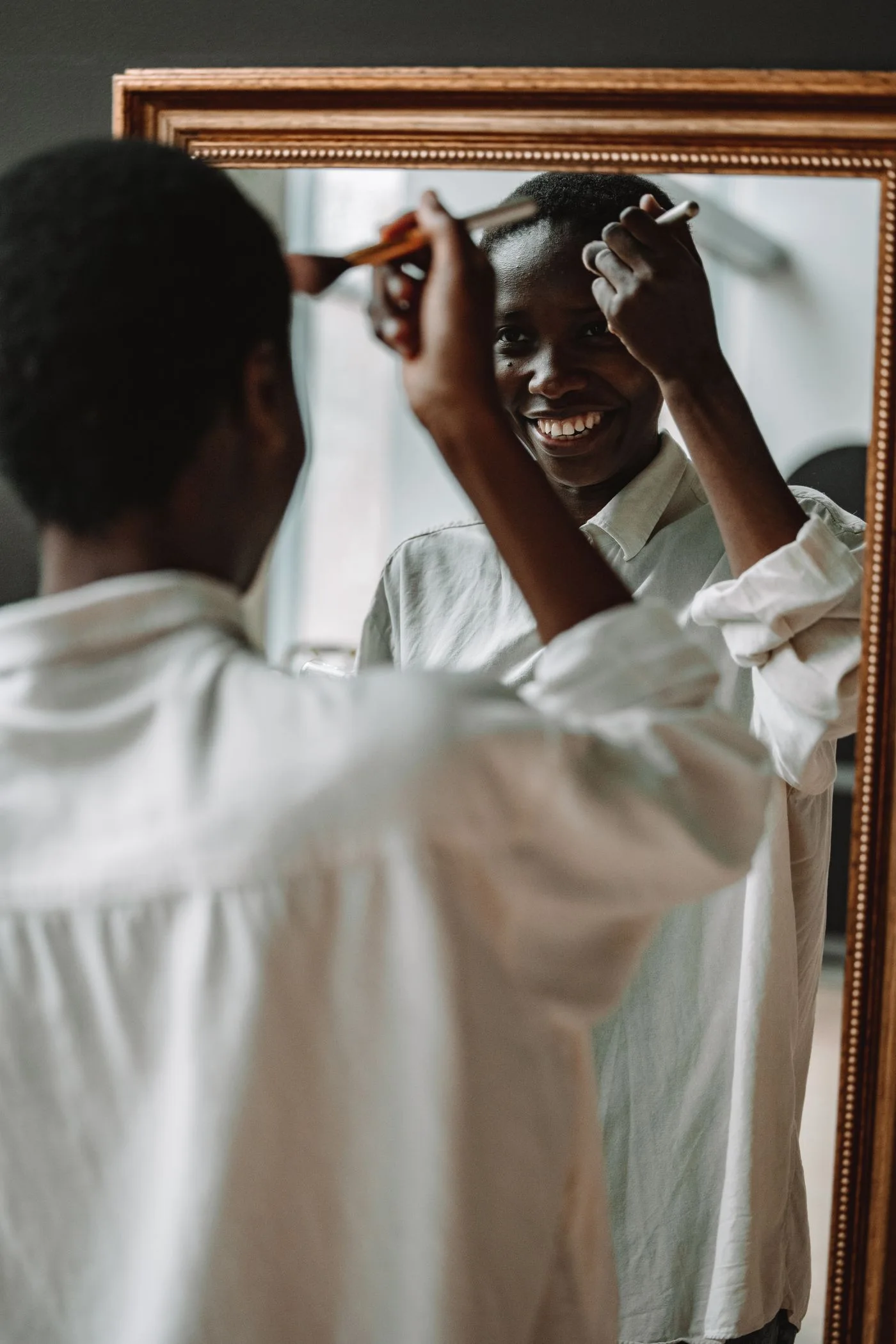
Use a stable mirror and suitable seat or standing arrangement. Check that you can see without leaning awkwardly across water, cables or unrelated objects. A larger decorative mirror may provide context while a smaller one serves detail. Neither should be balanced insecurely to achieve the preferred height. The setup should support ordinary use rather than create another physical adjustment.
Observe the light direction
Look for shadows caused by overhead light or a source behind the head. Try a safe position facing available daylight where practical, keeping glare out of the eyes. Do not change several products during the same comparison. That makes it easier to understand whether the lighting, rather than formula or shade, caused the difference you noticed.
Use detail for a defined task
Follow product directions and use the close view where it genuinely helps. Then return to a normal view to assess balance. Extremely close inspection can encourage repeated layers on features that are not noticeable in conversation. Choose the result you enjoy in real use, not a requirement that every small area look perfect under one unusual magnification.
Test at the real routine time
A room bright at noon may be dim before an early appointment. Check the setup when it is normally used and after sunset where relevant. A suitable lamp may help, but follow fitting and bulb specifications and keep electrical equipment away from water. Use competent help for installation or uncertain electrical work instead of improvising from a decorative idea.
If makeup looks different outside
Review light direction, amount and the exact shade before replacing the whole collection. A brief daylight check can provide another context where available. Phone photographs and screens alter exposure and colour, so they should supplement the mirror rather than act as perfect evidence. Change one variable and use familiar products while comparing.
Is an illuminated mirror necessary?
Only if it solves a clear problem that safe repositioning does not. Compare stability, dimensions, power and controls before buying. A plain mirror in a better place may be enough. Clean according to surface guidance and keep the active tools within comfortable reach. A useful beauty setup lets detail and the complete look inform one another, without turning a close-up view into a reason to keep correcting indefinitely.
Related reading
Continue with Makeup Brushes: Buy for the Job, Keep the Kit Manageable and How to Choose an Everyday Makeup Finish That Fits Your Day. These existing guides provide a broader starting point for the related wardrobe, home or planning decision.
Our approach
Start with what you own, identify a real gap, then compare fit, materials, care and return terms before buying. Availability and prices can change. Read our editorial policy or send a correction.