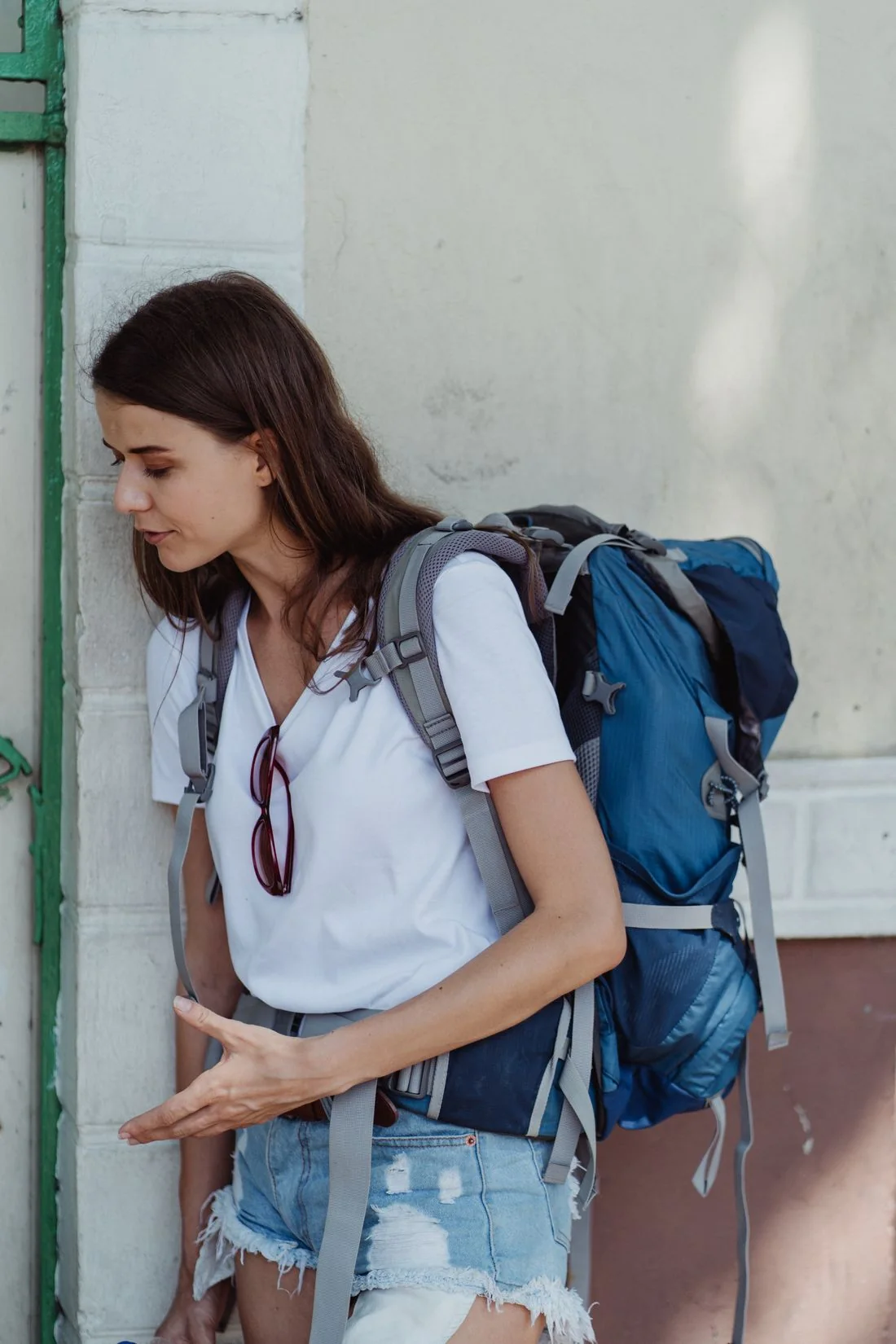
A backpack changes the way a top sits across shoulders and back. Even familiar casual clothes deserve a trial once the bag holds the real day's contents. Start with the carrying role and a comfortable base. The useful combination allows normal movement without repeated neckline pulling or a special posture needed to keep straps in place. A simple T-shirt does not automatically make every loaded bag easy to manage.
Pack for the actual outing
Use necessary items and follow capacity and loading guidance. Remove duplicates before assessing comfort. An empty bag cannot show how straps behave during ordinary use. Keep important or vulnerable belongings managed appropriately for the setting. Spare space does not need filling merely because the bag is larger than the day's immediate needs.
Use intended adjustments
Read the product guidance and operate supported features. Inspect condition and hardware. Choose a position comfortable for your body and movement rather than copying a fixed visual rule. Avoid improvised attachments or an unsuitable load. If discomfort persists after appropriate adjustment and reducing contents, choose another carrying arrangement instead of expecting the top to compensate for everything.
Observe contact with clothing
Walk, sit and turn. Notice trapped sleeves, neckline pulling or rubbing. A loose garment can behave differently from a closer one. Compare another familiar top to understand the relationship. The goal is useful comfort, not holding the shoulders in a particular position so the outfit looks neater. Two items can work separately and be unsuitable together for a full day.
Include temperature changes
Try the bag over the outdoor layers and after removing them. A coat alters strap fit and accessible pockets. Keep the indoor base complete and use appropriate protection for conditions. If a removed jacket will go inside, test the actual space with normal contents. A backpack's casual association does not establish that a thin top suits the whole journey.
Read contact and care guidance
Inspect rough edges, hardware and dirty areas where the bag meets fabric. Follow suitable cleaning instructions for both materials. Do not apply one treatment to every rubbing or transfer concern. A bag used across different outfits benefits from periodic condition checks. Manageable care belongs to its usefulness, especially when the same carrying arrangement is repeated frequently.
Does the bag need to match the top?
No. A quiet colour relationship may help if enjoyed, but fit and capacity lead. Use familiar clothes and practical shoes first. The successful backpack serves the day without turning the base outfit into a sequence of adjustments, leaving attention for the activity rather than keeping every strap and sleeve in a perfect photographed position.
Related reading
A Practical Capsule Wardrobe for the Week You Actually Have, A Rainy Commute Kit That Still Works When You Arrive.
Our approach
Start with what you own, identify a real gap, then compare fit, materials, care and return terms before buying. Availability and prices can change. Read our editorial policy or send a correction.